
Can you charge the Powerwall via the Grid?
Can you charge the Powerwall via the Grid?
Although the Tesla Powerwall is the most popular Solar home battery does it live up to its name? In this Tesla Powerwall review will review the key features and compare it to other battery backup devices.
What exactly is what is Tesla Powerwall and how does it work?
The Tesla Powerwall is the lithium-ion battery which stored energy from Tesla sun’s power is commonly associated with the storage of this energy. These batteries are able to be charged by any form of energy to provide an alternative source of power in the event of power outages. As an energy storage device in one, you can connect as many as 10 Powerwall units. This makes them ideal for small and medium-sized businesses and also for small-sized businesses.
Tesla Battery Storage 2 and Powerwall+ Tesla Battery Storage 2 and Powerwall+ are currently available to purchase. Powerwall 1 Powerwall 1 was retired in 2016 but the more recent models far outperform it. A single Powerwall 2 or Powerwall+ can store 13.5 kWh, while a Powerwall 1 can only store 6.4 kWh. They also have a higher output voltage (5.6kW vs. 3.3kW), which permits them to power multiple devices simultaneously.
Both the Powerwall 2 and Powerwall+ have the same capacity of storage. However, the Powerwall+ has an inverter that allows for easier integration with solar panels. The Powerwall+ is able to provide more kilowatts under full sunlight, whereas the Powerwall 2 can provide the same power regardless of whether the sun is producing any generation.
Here's a brief A summary of the output from Tesla Powerwall:
The first Powerwall 2 provided 5 kW continuous power and 7 KW peak power.
Powerwall+ and later Powerwall 2 versions have 5.8 kW continuous power and 10.2 kW off peak power.
Powerwall+ Powerwall+ can reach 7.6 kW of continuous power when the solar panels are exposed to full sunlight. It also can reach 22 kW peak power when fully sunlight-lit.
Powerwall 2 Powerwall 2 can be used to store energy in your solar system. The Powerwall+ can be installed with new solar panels because there isn’t any need for the addition of an inverter. This article refers to the Tesla Powerwall 2 simply as the Powerwall in this article. The original version is no more available.
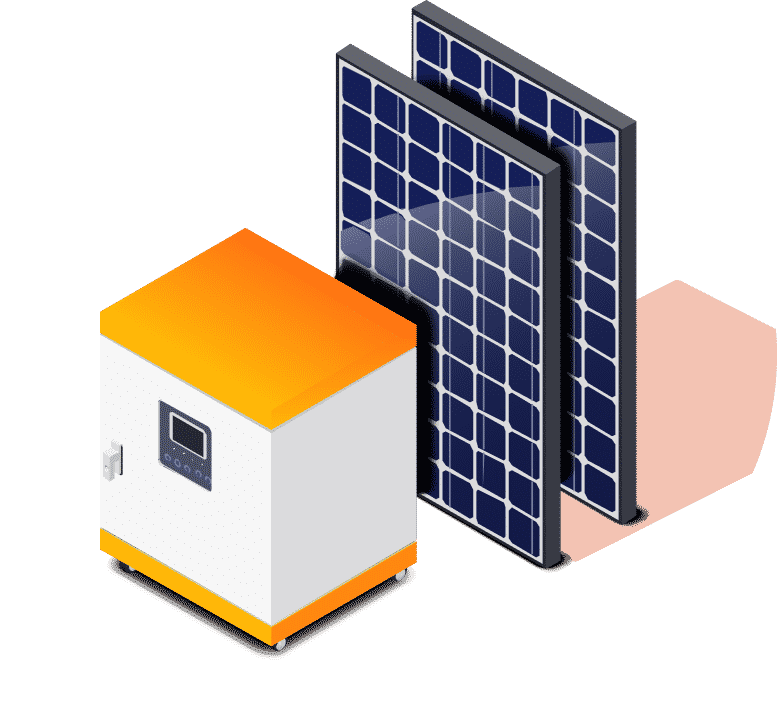
What is the process? Powerwall Batteries work
Batteries are all stored in DC electricity (direct current), solar panels also generate DC power. But, appliances in homes are self powered mode by AC. Refliers and inverters are here to help.
The DC power generated by solar panels runs through an inverter. It is then converted to AC and then flows throughout your house. You can charge your battery by using an alternate power source. To store the battery, it will need to pass through an rectifier.
Both the Powerwall 2+ and Powerwall+ include an internal rectifier as well as an inverter to change AC and DC electricity. The inverter on the Powerwall 2 only is used to power the battery. A separate inverter is needed to power the solar panel. Contrary to this, the Powerwall+ includes a solar inverter. Even if the solar panels aren’t making electricity, the two models can be charged from the grid.
You can make use of the extra energy stored in the Tesla Powerwall whenever you want. There are instances when the stored energy is more expensive. Numerous electricity companies charge high peak tariffs for homes that consume more energy after sunset. You can maximize your savings on electricity by drawing power from your Powerwall during these times of the day , instead of the grid power.
The number of solar panels required to fully charge your Tesla Powerwall is determined by your solar exposure. The Powerwall has a charging rate of 90%. You’ll need 15 kWh from the solar panels to produce 13.5 16 kWh worth of useable energy.
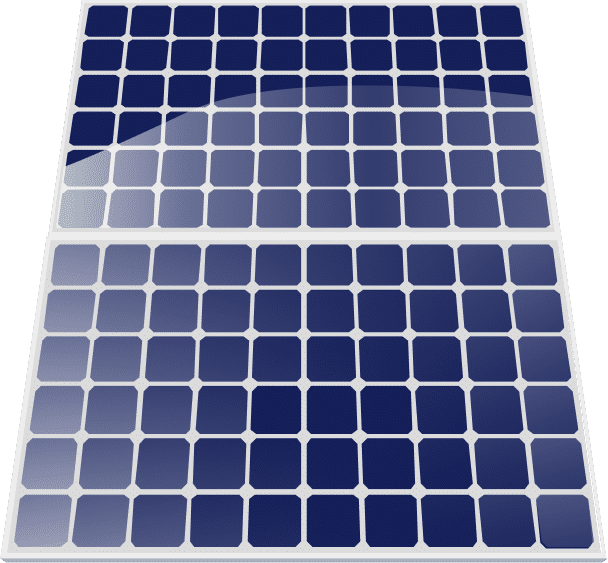
This is what it appears like in a standard solar panel. If you assume the solar panel’s power to be 330-360 watts, then you’ll need between 10 and 14 panels to produce 15 kWh per day.
The number of solar panels required to charge a Tesla Powerwall depends on the model and the local sunlight conditions.
Be aware that the Powerwall recharges at night, and your home continues to use solar power. You will need sufficient solar panels to power the battery and cover your consumption for the day.
Tesla Powerwall Specifications
The Tesla Powerwall has one among the best specs on the market for home batteries. While there are many energy storage products that offer excellent performance, it is the Powerwall is the best when it comes to power consumption and storage capacity.
The batteries are created using a lithium nickel manganese and cobalt oxide chemistry. NMC technology refers to a type of lithium-ion batteries that have a high storage and power capacity for their compact dimensions.

Here are some key specs for the Tesla Powerwall:
- The capacity for energy storage: 13.5 kWh
- Continuous power: 5.8kW (or 5 kW for older Powerwall 2 units).
- Power peak: 10 kW (7.5 Kw for Powerwall 2 units).
- Size: 45.3 inches x 29.6 inches 5.75 inches 5.75 inches
- Weight: 251.3 pounds
- Temperature range: -4degF to 122degF
- Warranty: 10 Years
The Powerwall+ can produce a greater output in full sunlight in conjunction with solar panels or solar roof. Because it features an inverter for solar and a solar inverter Powerwall+ is larger and heavier than the standard unit.
- The capacity for energy storage: 13.5 kWh
- Continuous power, without sun: 5.8kW
- Peak power without sun 10kW
- Continuous power and full sunlight: 7.6 kW
- Peak power in full sun 22kW
- Dimensions: 62.8 in. Dimensions: 62.8 in. 29.7in. x 6.3in
- Weight: 343.9 pounds
- Temperature range: -4degF to the temperature range of 122degF
- Warranty: 10 Years
The solar inverter in the Powerwall+ is 97.5 percent efficient and has the Power Tracking tracker circuit with four power tracking circuits of approximately 98 percent. It is possible to group more than four panels of solar and link them to one MPPT circuit to increase the power output.
Powerwall Modes
The Powerwall can be configured to meet the particular needs of your home’s energy consumption. The Tesla app allows you to track and manage the performance of your solar system. It has control modes such as Self-Powered, Time Based Control, Backup only mode, as well as Time-Based Control.
Installed Tesla solar panels will include at least one Powerwall+. This mode allows you to only use the energy you need to power your home or charge your Powerwall. Preconditioning is a feature that can be turned on to warm your Powerwall for improved functioning and charging efficiency when temperatures fall below freezing.
Find out more about these different modes to use with your Powerwall.
- Backup Reserve
- Self-Powered
- Time-Based Control
- Energy Exports
- Advanced Settings
- Only for self-consumption
- Preconditioning
- Grid Charging
In certain circumstances, Powerwall can be charged from the grid. The local utility provider or installer will decide whether you can charge from the grid. If Powerwall cannot charge from the grid you’ll see this message “Grid charging restricted” - this is when the utility stops charging or when the system is owned through a lease. The following options will be offered once Powerwall is able to charge the grid
Powerwall will not be charging the grid if configured in the direction of “No”. This will improve the Self-Powered functionality while decreasing your dependency on grid. This setting will comply with Investment Tax Credit (ITC) which lets you charge your Powerwall completely using solar energy.
If Powerwall is set to “Yes”, Powerwall will charge the grid from the grid when there’s not enough solar to maintain the Backup Reserve or if there’s an financial benefit to Time-Based Control. Before you turn on Grid Charging be sure to consider your energy requirements and consult to your tax advisor regarding tax impacts.
Tesla Powerwall Cost
Despite the fact that the Tesla Powerwall is more pricey than other battery systems, it comes with the largest storage capacity and the power output to perform. Based on the quantity of units ordered, the price will be calculated in the following manner one Powerwall costs $10,500 and two Powerwalls cost $7,000 ($8,500). You can purchase them directly through Tesla however they are also available from third-party suppliers as well as solar installers in close proximity to you.
The solar 26% federal tax credit is offered to batteries and powerwalls. This reduces the price for each unit down to $7770, down from $10,500. To qualify, however you must satisfy certain conditions:
To get credit to be eligible for credit, the Powerwall is required to be used alongside solar panels or other renewable energy system. A standalone unit that draws only charges from the grid is not qualified.
The Powerwall must get all its power from solar panels if it is intended to be used within the home.
If it’s being used in a commercial setting that requires at least 75%, the majority must come from solar panels.
You may be eligible for tax breaks, financial incentives or even tax-free benefits according to your area. Check out the local incentive programs and requirements prior to installing a Tesla Powerwall.
There are a few other things to consider if you’re thinking of buying Powerwall. Powerwall.
The Powerwall is very well-known and there are often lengthy waiting times for items to be delivered after they have been purchased.
Tesla has stopped offering Powerwalls as a standalone solar product. They are available only together with new solar arrays or solar roof installations.
An outside provider is required when you want to include an Powerwall or other inverters your solar array.
GET YOUR FREE PROPOSAL IN A FEW EASY STEPS
Fill out the form and our sales consultant will contact you! Once you’ve had your initial consultation, you’ll begin your solar journey.

First name is required
Last name is required
Last name is required
Email is required
Email is required
Phone is required
Please enter a valid property address
Property address is required
Schedule Your Appointment
ATTACH YOUR UTILITY BILL (optional)
Some information is missing or is incorrect, please fix the issues above and resubmit.